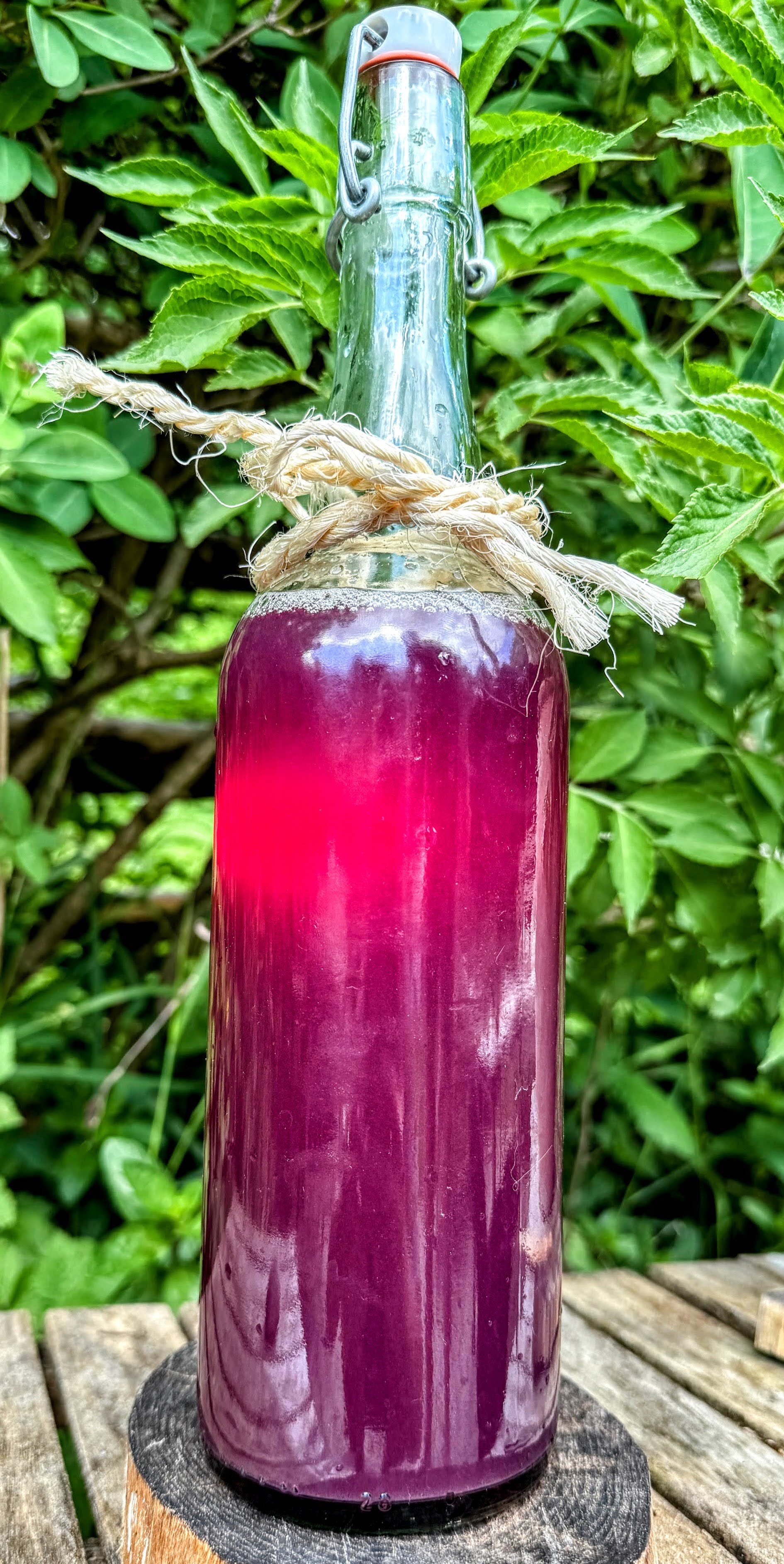
Our experiments with foraged wrinkly rose extract continue, this time in the form of vividly magenta ice cubes. One of the fascinating properties of our homemade rose extract is its ability to shift colors based on acidity. Depending on how we freeze it, we can create a striking color-changing effect in lemonade or other drinks.
We made a fresh batch of rose extract (check out our process here: Wild Rose Extract) and, instead of acidifying it for long-term storage, we diluted it and froze it into ice cubes. This preserves the magenta hue—until it meets something acidic like lemonade, where it transforms into a vibrant red-pink, swirling beautifully as it melts.
There are two ways to achieve this transformation:
Freezing water-thinned rose extract and adding the ice cubes to lemonade, watching as lilac tones turn pink.
Freezing lemonade or lemon juice into ice cubes and dropping them into lilac-colored rose water, reversing the effect.
Since the strength of the extract depends on the forage, and dilution affects both color and taste, there’s no perfect formula—just trial and error. The goal is to keep the stunning color while avoiding an overpowering floral flavor.
A Note on Ice Cube Trays
We always opt for stainless steel trays over plastic or silicone. Stainless steel doesn’t stain, doesn’t absorb flavors, and eliminates concerns about leaching into our ice. One day, we can make coffee ice cubes; the next, delicate rose ice cubes—without a trace of crossover.
More rosey posts:
These floral ice cubes are not just a visual delight but a refreshing way to enjoy the essence of wild roses in summer drinks. Whether it’s a casual afternoon lemonade or a fancy floral cocktail, they bring a little extra magic to every glass.
Embracing the natural beauty and flavor of roses in our lemonade allows us to celebrate the season in a unique and tasty way. Try making your own batch of this floral-infused refreshment and bring a taste of summer to your table with every colorful, refreshing glass.
This process of creating rose extract from our garden's bounty is a delightful way to bring a piece of spring into our home year-round. Whether used in refreshing beverages or as a natural flavor enhancer in sweets, the extract remains a testament to the beauty and aroma of roses.
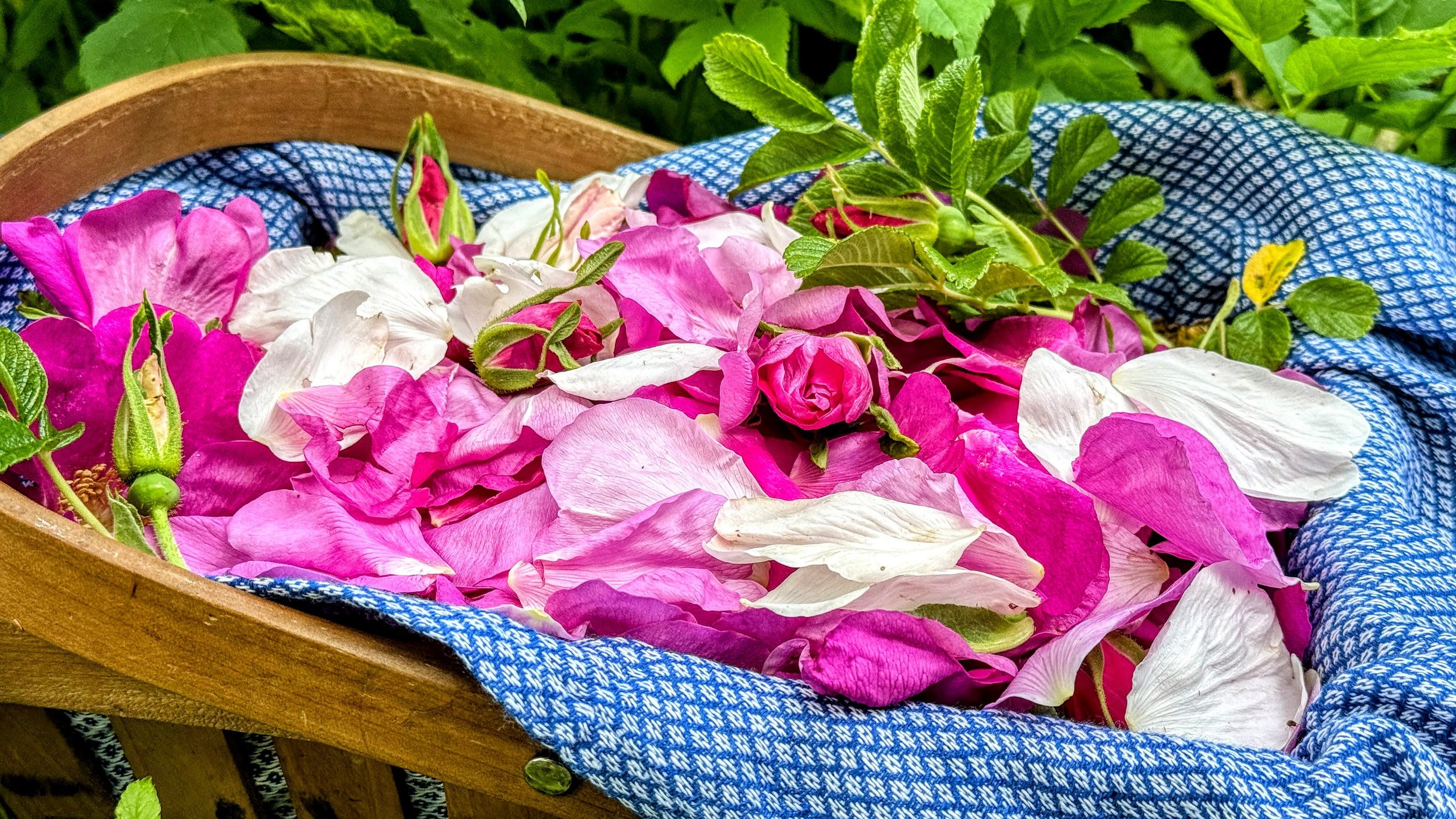
In the lush late spring of Scandinavia, we forage for wild roses, an invasive yet beautifully aromatic species. Harvested carefully to capture their peak aroma, these roses vary from lilac to white, each exuding a potent, citrusy fragrance.
The Nordic-Japanese rugged rose is a fragrant beauty that dominates the Scandinavian landscape. But bring it inside, and you'll find its petals quickly fall away, as if the flower insists on belonging solely to the wild. The fruits on the other hand..
Discover the vibrant hues and complex flavors of Scandinavian rosehip marmalade, made from the rugged Japanese rose along our coastline. This tart-sweet delicacy captures the essence of the harvest season, perfect on bread or as a star ingredient in desserts.
Nestled within the heart of Mariager, a picturesque town known as 'The City of Roses', is a haven unlike any other – the enchanting Mariager Rosarium. It is a kaleidoscope of colors and fragrances, a place where over 500 species of roses are nurtured, each one a spectacle of Mother Nature's artistry. Here, roses of unimaginable hues bloom in all their glory, with ranges as bright as a midsummer's daydream to pastel palettes that spark the imagination.
In the garden's tapestry, our climbing rose waits, an understudy to the tree blossoms' firework display. Yet, as their spectacle wanes, the rose steps into the limelight, blooming pink surprises at eye level. A botanical cousin to pears and apples, this floral delight reminds us of the unexpected joys and hidden connections in nature.